In 2006, hardly anyone here was talking about specialty coffee.
In 2006, hardly anyone here was talking about specialty coffee. Back then, Prague was dominated by dark-roasted, largely indistinguishable coffee. Very little was said about where it came from.
We started asking questions.We asked them out loud, and to anyone willing to listen. Most people weren’t particularly interested. Some laughed. But a few stopped after their first sip, tasted again, and asked:
Where does this coffee come from?
And that question is where our story began.

“Today, specialty coffee is a familiar concept. Back then, even finding the right words in Czech to talk about this new approach to coffee wasn’t easy. At La Bohème, we spent a long time searching for them. The Czech specialty coffee scene was then built by many talented people. But we were there at the beginning - and we’re proud of that.”
Charles Fleer - Founder
We didn’t take the shortest route. And we don’t regret it.
The easiest way would have been to buy green coffee from a trader, roast it, and ask no further questions. But we wanted to know more.
It started in New York, where Charles Fleer fell in love with coffee. He returned to Prague convinced that you should be able to taste where a coffee comes from.
So he began travelling to farms, getting to know the places, the harvests and the people behind each coffee, and selecting coffees directly at the source. Over time, the whole team joined him.
For us, knowing where our coffee comes from isn’t marketing. It’s simply how we work.
That’s why we went to the source ourselves.
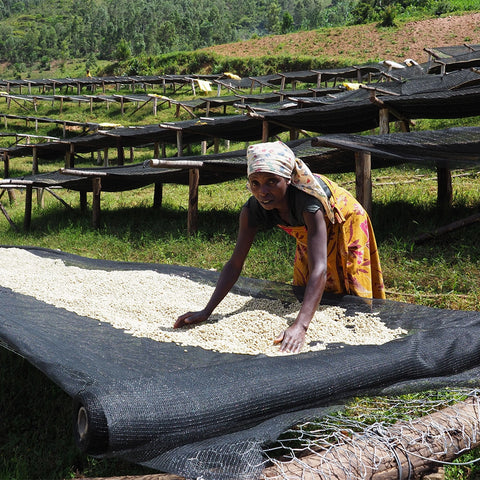
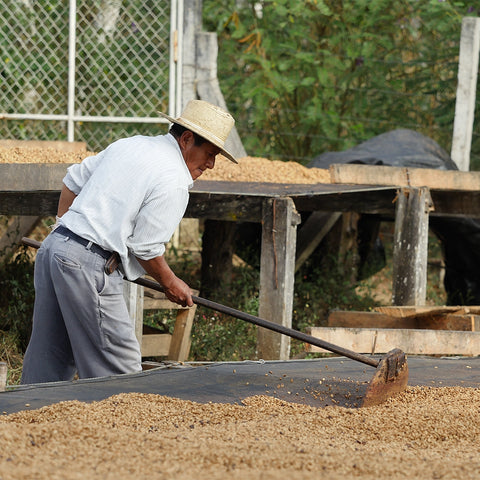
We’ve been buying coffee directly since 2006, and we’ve been returning to the farmers ever since. We’re not interested in a list of suppliers put together from behind a desk. What matters to us are the places and the people we get to know, harvest after harvest. In East Africa, we’ve visited Rwanda, Burundi, Kenya, Ethiopia, Uganda and Congo. We’ve travelled through the coffee-growing countries of Central America, as well as Bolivia, Colombia, Peru and Brazil in South America. Our journeys have also taken us to Indonesia, Thailand, Taiwan and Saudi Arabia.
For us, it’s not enough to simply say where a coffee comes from. We want to know the place, the harvest and the people behind it.
Behind every farm is a long-term relationship.
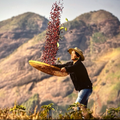
FAF
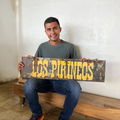
Los Pirineos
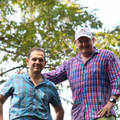
Finca La Bolsa
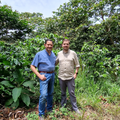
Finca Tehuya
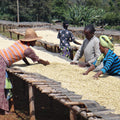
Ato Dukal
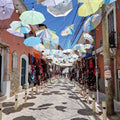
Senda Salvaje

Koerintji Barokah Bersama
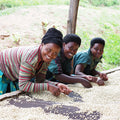
Women Coffee Extension
Then comes the roasting.
Every coffee comes to us with its own character. Our job isn’t to change it, but to let it shine.
That’s why we approach each coffee differently. We follow every stage of the roast, compare individual batches, and taste the results again and again at the cupping table.
After the journeys to meet farmers, the harvests and the careful selection, roasting is the final step that determines what you ultimately taste in the cup.
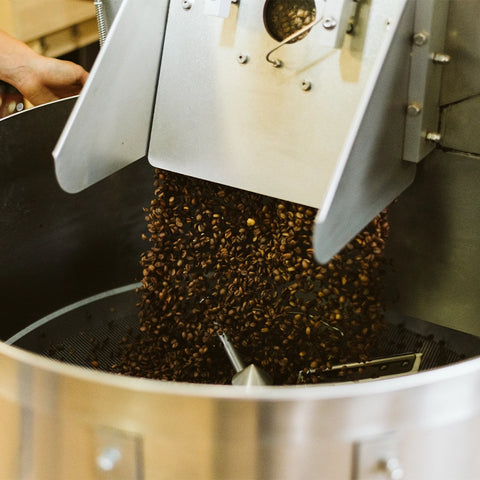
“We control every step - from selecting the green coffee to the cup someone eventually tastes.”
Consistent control isn’t an end in itself. We know the journey of our coffee from the farm to the roastery, and we check every batch at the cupping table. That means we know where to look when something doesn’t taste the way it should.
We could count the tons. But the cups mean more to us.
Since 2006, we’ve roasted enough coffee to make more than 150 million cups. But every one of them starts the same way - with selecting good coffee and taking care of every step that follows.
After all those cups, one thing hasn’t changed: quality can never be taken for granted. We have to earn every cup.
Coffee that found its place.
Good coffee has a way of finding its way between people. Over the past twenty years, ours has reached places we never imagined when we started.
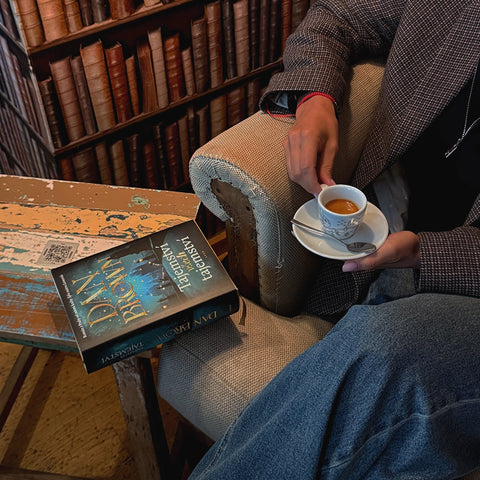
It was served in Václav Havel’s office, enjoyed by Karel Gott and Jaromír Jágr, and today it has a place in cafés, restaurants, hotels, offices and homes across the country. And sometimes it travels a little further - even into Dan Brown’s Prague story.
Whenever coffee gave us a chance to support a good cause, we were there too - from Forum 2000 to charity projects and cultural events with Kryštof.
Famous names have never been our measure of success. The best recommendation is still the same: when someone comes back for another cup.
Most of our coffee is served in places that aren’t ours.
Over the years, we have supplied coffee to Mandarin Oriental, Four Seasons, and selected Marriott and Hilton hotels. Today, you’ll find our coffee at Fairmont Golden Prague, in the offices of Google and Microsoft, and at Prague businesses such as Bakeshop and Arctic Bakery - as well as many other cafés, restaurants, hotels and offices.
Every partner is different. That’s why we treat every coffee program as if it were our own - we train baristas, take care of the equipment, and fine-tune the coffee to the local water and brewing methods. And when something goes wrong during the morning opening, we pick up the phone.
We don’t want to be more visible than our partners. We want them to be seen.
We succeed when they succeed.
COFFEE IS JUST THE BEGINNING
-
1.
We train people
Because good coffee needs someone who understands it.
-
2.
We look after quality
We taste, test and regularly check for consistency.
-
3.
We take care of the equipment
Service and reliable equipment are part of a great cup.
-
4.
We think about the whole menu
From coffee and tea to the entire beverage program.
-
5.
We pick up the phone
Because problems have a special talent for showing up just before opening.
-
6.
6. We know what it’s like behind the bar
Running our own cafés reminds us that theory and everyday operations are two very different things.
After twenty years, we’ve learned that delivering good coffee is the easy part. What matters most comes after.
Good beans are the foundation. A great cup is made together with people.